
If you love mechanics, why not become a watchmaker? A time-honored profession that demands golden patience and flawless precision, being a watchmaker also means having a healthy dose of passion for these magnificent instruments for measuring time. So if you’d like to become an artisan technician specializing in this field, you’ve come to the right place!
Objectif Horlogerie, as a specialist in training watch disassembly and reassembly, presents in this article the different ways to become a watchmaker, whether during your schooling or for a career change.
A watchmaker with many missions!
A true micro-mechanic and, for some decades now, an electronics expert, the watchmaker assembles, repairs and adjusts watches, but not only that. In fact, this craftsman also deals with clocks, pendulums or alarm clocks, mainly mechanical, but sometimes also electronic.
In the event of a problem with a watch or clock, this technician will locate the fault and know how to explain it. He can then repair and replace defective parts of a movement, or even electronic components, and then check and test whether the part works again. After a repair or maintenance, he will make adjustments to make the watch accurate using measuring devices such as a chrono comparator.
There are, of course, many different types of watchmaker: those who work in a boutique as clockmakers/repairers, others who work on imposing clocks (found in public places), and still others who work for manufacturers.
But how do you become a watchmaker?
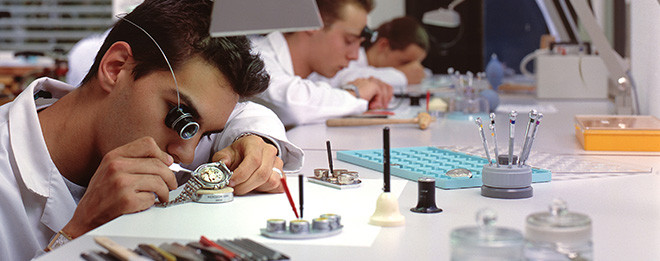
CAP Watchmaking
Initial training in the watchmaking trade, the CAP will last two years, and we can start right after secondary school at the age of 15. You don’t even need to have the Brevet des Collèges. You could also do a CAP (vocational qualification) in watchmaking as part of a career change, for example. here. This conversion lasts a year.
BMA Watchmaking
After a CAP in watchmaking, you can continue your studies with a brevet des métiers d’art. This is equivalent to a vocational baccalaureate. With a BMA in watchmaking, you’ll become a true watchmaking technician, capable of repairing and restoring antique watches and parts. You can also analyze a part to determine the problem, and then set about repairing it. Again, you will find many schools or high schools that offer this training.
DMA Watchmaking
If you continue your studies a little longer, you can take the Diplôme des métiers d’art, which also takes two years to complete. Please note that you need to have a BMA to be eligible for this diploma. With it, you’ll become an artisan d’art specialist and be able to start marketing your own watches, working as a specialist watchmaker or heritage curator.
Finally, here is a short list of high schools that offer watchmaking courses: <1>: <2>http://www.montresethorloges.fr/formation/lycees/
Certificates and other training
g
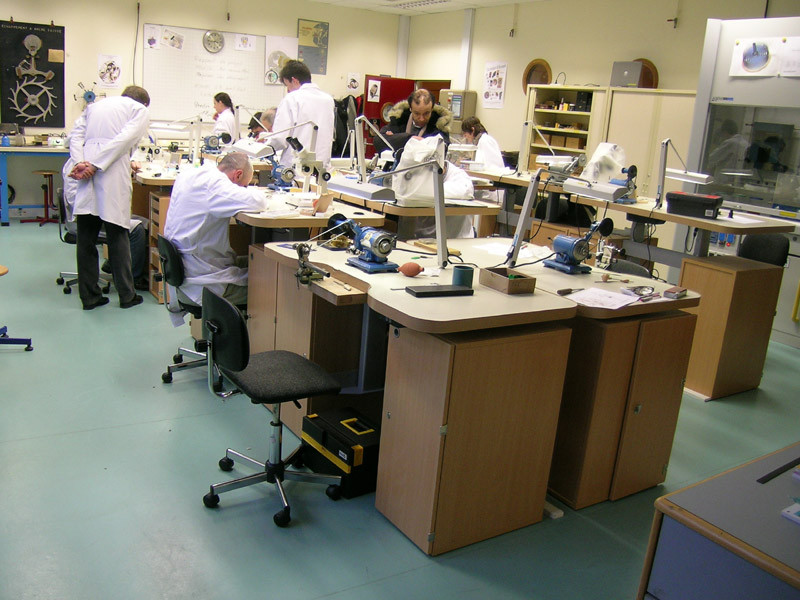
In addition to the diplomas awarded by vocational high schools, there are also other training courses and certificates that attest to your skills in this field.
In particular, there are two CQP (professional qualification certificates) :
- Watchmaker-repairer at the Fougères School of Watchmaking
- Complicated watches Highschool Jean Jaurès de Rennes. This course is also known as FCIL
With these certificates, you give your employer a guarantee that you have a quality watchmaking education, especially in the complicated watchmaking field.
As an accredited training organization, Objectif Horlogerie offers customized training courses tailored to your needs (repair, polishing, complicated watches, etc.), ranging from half a day to several weeks. Several funding options are available, including personal funding or employer-initiated training plans using your Personal Training Account (CFP, formerly DIF). (DIF)

