
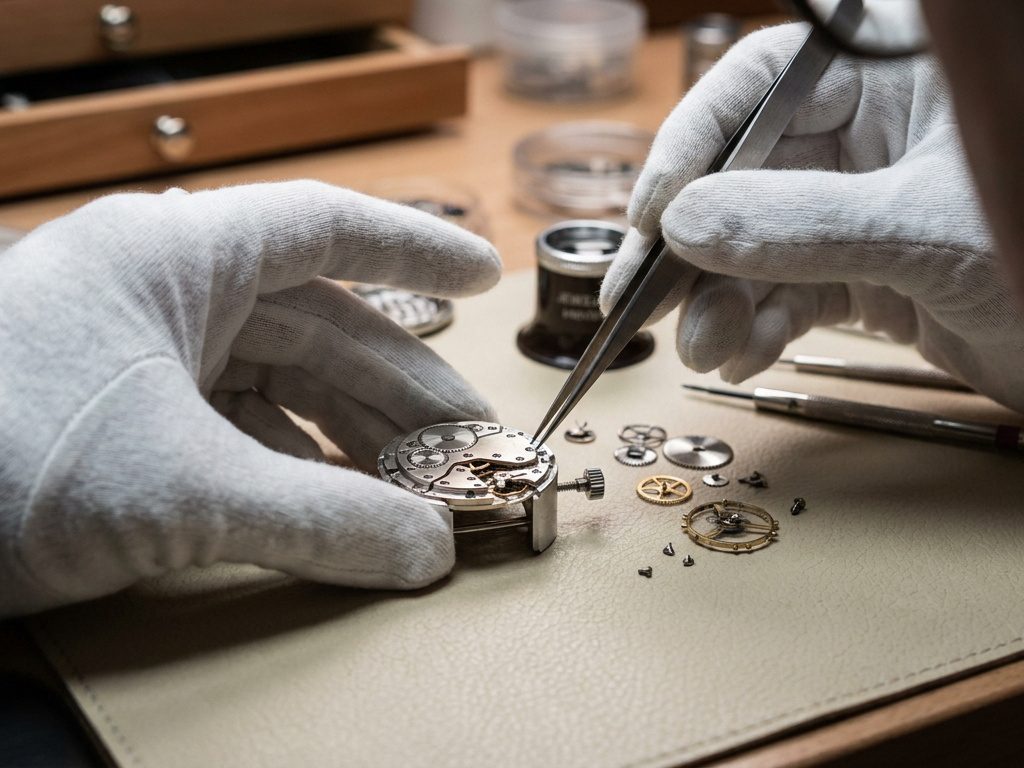
Did you know that mastering the art of micromechanics in Quebec requires a comprehensive 1,800-hour workshop program? Yet, many enthusiasts still hesitate to step into the workshop, intimidated by the exacting nature of the craft or the scale of the academic journey. People often fear they lack the dexterity needed to handle components so small they sometimes defy the naked eye. To dispel any doubts and turn your plan to become a watchmaker in Canada into reality, we explore the classes paths and hands-on experiences that define this exceptional career. We guide you through the technical requirements and professional opportunities, helping you transform your curiosity into genuine professional expertise.
Becoming a Watchmaker in Canada: The Realities of a Precision Profession
The profession of watchmaker in Canada requires a 1,800-hour vocational diploma, a program offered primarily in Quebec. This profession combines traditional micromechanics with modern electronics to maintain high-precision timepieces. Moving from theory to practice requires total immersion in the workings of time.
The daily life of the watch restorer: between tradition and modernity
You disassemble the movement with meticulous attention. Each component then undergoes rigorous ultrasonic cleaning. Finally, you reassemble it, applying specific lubrication. Your expertise covers the springs of vintage watches. Yet, you also configure the latest quartz movements:
- Complete disassembly
- Chemical cleaning
- Lubrication of pivot points
- Regulator adjustment
This technical mastery is necessarily accompanied by intrinsic qualities that we will now explore.
The personal aptitudes required to manipulate the infinitely small
Patience becomes your primary tool during delicate operations. Fine manual dexterity is essential for handling microscopic screws. You must remain calm when faced with unexpected technical issues. Your eyesight is constantly engaged while working under the bench magnifier. Prolonged concentration requires rigorous management of eye strain. Regular breaks preserve your visual acuity.
Training pathways and qualifications recognized in Quebec
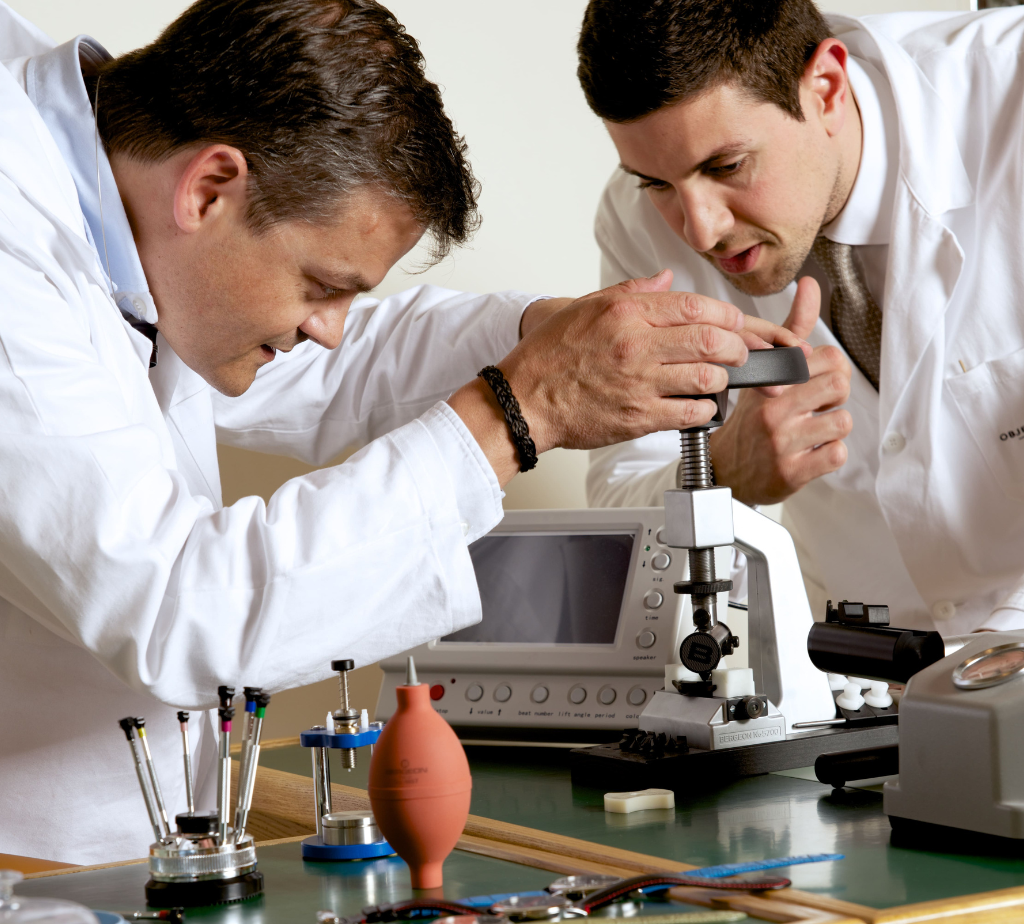
Once you have grasped the demands of the profession, you need to identify the academic institutions in Quebec capable of imparting this technical expertise to you.
Centers of excellence for obtaining a professional qualification
The Centre de formation professionnelle de Québec offers a comprehensive program. The École de Joaillerie de Montréal also offers specialized modules. These institutions guarantee training that meets industry standards. The standard curriculum spans 1,800 intensive hours. This volume of training enables students to master the full range of watchmaking complications:
- Diploma of Vocational Studies (DVS)
- Duration of 18 months
- Practical company internship
Technical content of the programs: from mechanics to electronics
Training begins with machining basic parts. You learn welding and high-precision metrology. These fundamentals are used to make missing components. Mastering measuring tools is part of your daily routine throughout the program. The training covers simple mechanical systems as well as complex complications. You also study the electronic circuits of modern watches. This versatility ensures your future employability.
Admission requirements and academic prerequisites for enrollment
Completion of Secondary III is generally required in Quebec. Proficiency in French is essential for taking the technical courses. Candidates often take aptitude tests. Please note that these programs welcome adults looking to change careers. Your past experience can enhance your profile during the admissions process, and you can further strengthen your application—for instance, through dexterity tests.
Getting a taste before committing: the Objectif Horlogerie approach
If the long program feels daunting, there are alternatives that let you test your genuine interest in watchmaking mechanics without an immediate commitment.
Short workshops to learn the basics of mechanical watches
Objectif Horlogerie offers 4.5-hour sessions in Montreal. Experts guide you as you discover a mechanical movement. You work directly with authentic parts at a professional workbench. The exercises include regulating the hairspring and routine maintenance. You learn to identify simple malfunctions. These hands-on tasks demystify the watch’s inner workings. Guidance from Paris-based professionals ensures high-quality instruction. You leave with a clear understanding of the profession’s technical challenges.
The value of practical introductory experience in validating a career plan
These workshops let you confirm your calling before investing in a long training program. You find out how patient you really are when working with tiny components. It’s an excellent way to validate your career plans. Many enthusiasts take the leap this way. The expertise of the instructors at Objectif Horlogerie provides practical insight into the market. They share their hands-on experience from the European and Canadian sectors, and their advice helps guide your future career choices. A short immersion avoids costly mistakes regarding direction. It is a step involving pragmatic reflection.
Career prospects and managing a Canadian workshop
Once you have your diploma in hand or your passion confirmed, the Canadian market offers various avenues for putting your new talents to use.
Career opportunities in jewelry stores and independent workshops
Local jewelry stores are constantly looking for qualified technicians for their after-sales service. You can also choose to work as a self-employed professional. This freedom allows you to manage your own client base. Jewelry repair often complements traditional watchmaking services. This versatility diversifies your monthly revenue streams, allowing you to meet broader customer demand. The high-end second-hand market is currently booming in Canada.
Luxury manufacturing firms based in Ontario or Quebec are also hiring. Your technical expertise will be valued there.
Equipping yourself and organizing your workspace for success
Assembling a high-quality basic toolset represents a significant initial investment. Prioritize precision screwdrivers and tweezers made of anti-magnetic steel. Good workbench lighting is essential. The workspace must be organized in compliance with strict cleanliness standards. Dust is the number one enemy of mechanical movements. An orderly environment reduces the risk of loss.
Observe health and safety guidelines specific to chemical products. Wear protective gear when polishing the cases. Your health ensures the long-term viability of your craft. Embracing the precision of the DEP (Diploma of Vocational Studies) or exploring your passion through a hands-on introductory session is the first step toward excellence. To become a watchmaker in Canada, combine technical rigor with boundless patience right now to breathe new life into the most prestigious mechanisms. Your future is being written to the rhythm of high precision.
FAQ
What training programs are available to become a watchmaker in Quebec?
To pursue this precision-oriented career, you can turn to the Centre de formation professionnelle de Québec, which offers a comprehensive 1,800-hour program, or to the École de Joaillerie de Montréal for specialized modules. These programs allow you to earn a Diploma of Vocational Studies (DEP) after approximately 18 months of intensive training, combining theory with practical workplace internships.
What are the prerequisites for enrolling in a watchmaking training program in Canada?
Admission generally requires the completion of Secondary IV in Quebec, or an equivalent level of education. Beyond your academic record, institutions often evaluate your profile through fine motor skills tests and motivational interviews to ensure you possess the patience and meticulousness required to handle microscopic components.
Is it possible to get an introduction to watchmaking before committing to a long course of study?
Absolutely, and we recommend exploring the short workshops offered by Objectif Horlogerie in Montreal. These 4.5-hour introductory sessions allow you to work with genuine mechanical movements at a professional workbench. It is an ideal opportunity to test your aptitude for micromechanics and validate your career plans before investing in a long-term training program.
What technical skills are acquired during the apprenticeship?
The curriculum is particularly extensive, covering everything from traditional mechanics to modern electronics. You will learn to disassemble, clean, repair, and adjust various timepieces, ranging from automatic watches to antique clocks. The training also includes valuable skills in metrology and the machining of custom parts, as well as an introduction to jewelry repair.
What are the career opportunities for a qualified watchmaker in Canada?
Once you have your diploma in hand, several career paths open up to you: you can join the after-sales service department of a luxury jeweler, work for watch manufacturers in Ontario or Quebec, or set up as a self-employed watchmaker. With the high-end pre-owned market growing rapidly, demand remains very strong for craftspeople able to restore complex movements.
What salary can a beginner watchmaker expect in Quebec?
At the start of a career, pay generally ranges from $14 to $18 per hour. However, with experience and specialization in high-end horology, earnings can increase significantly, often reaching a range of $40,000 to $70,000 per year for the most skilled technicians working in specialized workshops.

