
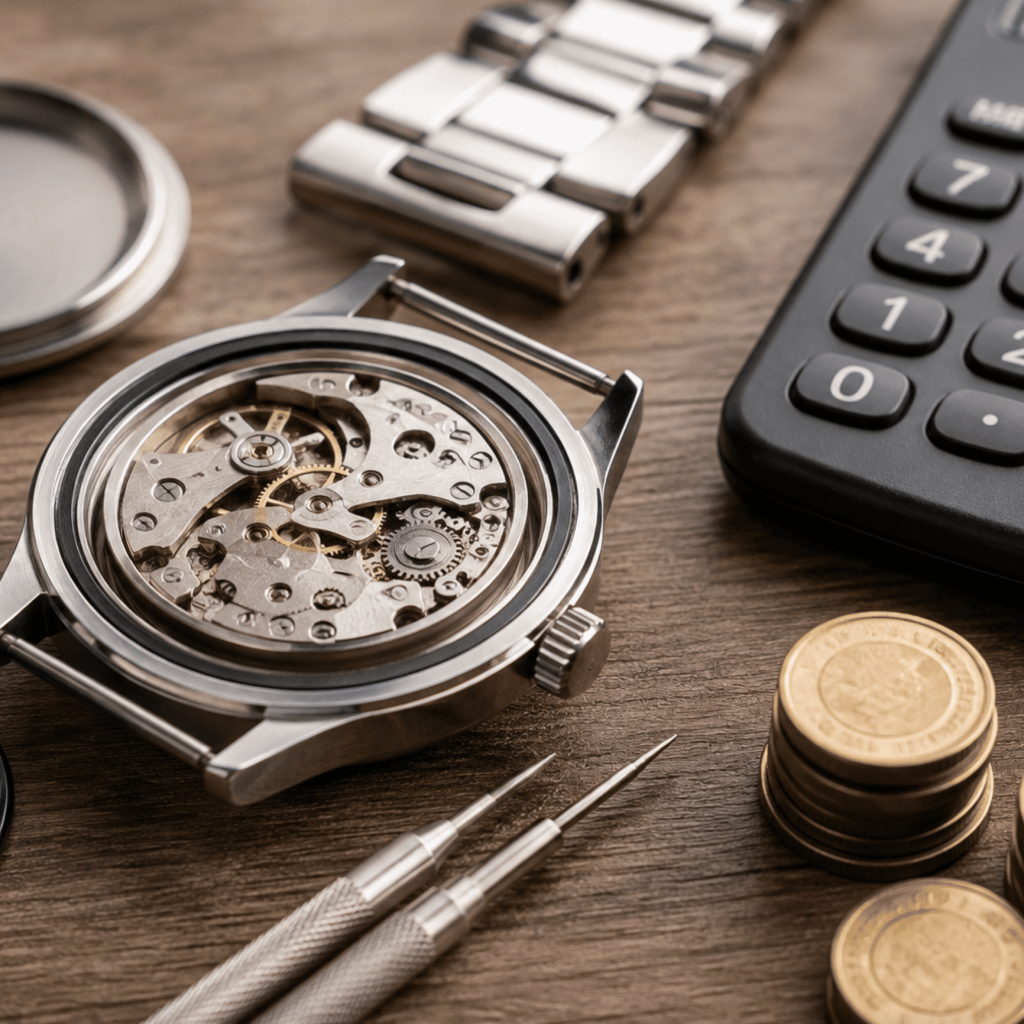
A precision timepiece is an investment in excellence, yet maintaining its heartbeat requires a calculated commitment, with a standard mechanical watch service cost typically ranging from €200 for entry-level calibers to over €1200 for prestigious manufacture movements. We understand that your watch is more than a tool; it is a legacy of engineering that demands expert preservation to retain its soul and market value.
Neglecting these intricate gears often leads to lubricant degradation, resulting in friction that can irreversibly damage delicate components. We are here to help you navigate the pricing tiers between independent artisans and official boutiques, ensuring you make an informed decision for your collection. We will break down every expense and technical necessity to ensure your timepiece remains a masterpiece of accuracy for generations to come.
One note before we begin: the figures quoted throughout this guide are the published rates of European workshops and manufactures, expressed in euros. Treat them as orders of magnitude. Rates in the United States vary widely from one state and one workshop to the next, so always confirm pricing locally before committing.
Mechanical Watch Service Cost and Price Benchmarks in 2026
A full service for an entry-level caliber generally falls between €180 and €300, while overhauls at prestige manufactures start around €1200. Routine maintenance every 5 to 8 years prevents lubricant degradation and costly component failures.
Navigating the financial commitment of horological maintenance requires understanding the tiers of craftsmanship involved.
Standard Pricing Tiers for Modern Timepieces
Current market rates for basic mechanical movements typically sit between €180 and €300 for a complete service. These entry-level prices cover essential cleaning, lubrication and timing adjustments for reliable daily wear.
Brands like Tissot or Seiko fall into this bracket. You must realize that mechanical watch service costs are significantly higher than simple quartz battery replacements due to labor intensity. Mid-tier luxury expectations often double these base prices quickly, with brands such as Longines or Tudor landing between €300 and €600. Expect quotes to scale with prestige.
The Financial Risk of Budget Service Providers
Ultra-low quotes often signal trouble for your timepiece. Cheap shops frequently lack proper ultrasonic cleaners or original manufacturer parts. They might skip essential lubrication steps entirely. This neglect leads to premature wear on delicate pivots.
Fixing a botched repair job is always more expensive than doing it right. Correcting amateur mistakes adds unnecessary costs. Unqualified shops may damage the dial or hands. These aesthetic mistakes are often permanent and devalue the piece.
Understanding The Full Overhaul Versus Routine Maintenance
While pricing sets the stage, the actual work performed determines the final bill and the watch’s longevity.
What Actually Happens During a Complete Disassembly
Every single screw and wheel is removed. This ensures no old, gritty oil remains in the jewels. The watchmaker performs a total movement strip-down. We apply ultrasonic cleaning and fresh lubrication. Watchmakers use specific synthetic oils for different friction points. Proper oiling is a high-precision task requiring years of mastery.
Professional service also includes water resistance testing for daily wearers. Gaskets must be replaced to prevent moisture entry. This step remains vital for long-term protection, and a dedicated seal renewal is billed from around €290 at a manufacture such as Piaget.
Distinguishing Simple Regulation From Deep Mechanical Restoration
Regulation only moves the regulator arm to adjust timing. It does not fix a broken mainspring or worn pivots. Real restoration involves replacing structural components to restore power.
If your timepiece stops randomly, simple regulation won’t help. You likely need a full mechanical overhaul to run reliably. We recommend professional intervention to ensure your investment remains precise.
How much does it cost to service a mechanical watch? The answer depends on these specific interventions:
- Timing regulation (fast/slow adjustments)
- Gasket replacement (maintaining seal integrity)
- Full overhaul (complete movement restoration)
Why Service Quotes Vary Between Boutiques and Independents
Beyond the technical labor, where you take your watch significantly impacts the total cost and the warranty you receive.
The Premium of Official Brand Service Centers
Manufactures publish high entry prices for their own workshops. Piaget, for instance, starts at €820 for a standard mechanical overhaul, and climbs to €1,010 for a complicated movement. Their specialized infrastructure ensures absolute precision. You essentially invest in peace of mind and factory-spec parts.
Official service warranties typically last twenty-four months. These certificates carry global recognition. They solidify the long-term value of your timepiece.
Independent watchmakers offer more flexibility. They provide personalized attention. Rates are often significantly lower.
How Complications and Vintage Parts Drive Up Expenses
Chronographs and GMTs command higher fees due to increased labor. More moving parts require extra hours. A perpetual calendar can take days of meticulous work to assemble correctly, with grand complications billed from around €2,740.
Scarcity drives prices for discontinued calibers. Vintage components are notoriously difficult to source. Sometimes a watchmaker must custom-fabricate a piece, which sends the final bill skyrocketing.
Determining if the Service Exceeds Market Value
Deciding on repairs requires a logical framework. On an affordable diver such as a Seiko SKX, service costs often approach or exceed the watch’s second-hand price. Owners frequently choose to replace the entire movement instead.
Sentimental value often outweighs market logic. Personal history makes a timepiece truly priceless. A grandfather’s watch remains worth repairing regardless of the total bill.
Recognizing the Right Moment for Professional Watch Care
Knowing when to pull the trigger on a service can save you from a total mechanical collapse.
Warning Signs Your Movement Is Failing
Erratic timekeeping and grinding sounds are clear distress signals. If your watch loses minutes daily, the mechanism is struggling. Grinding during winding often points to metal-on-metal wear caused by dried oils.
Moisture under the crystal constitutes a true horological emergency. Water will rust steel components within hours. This quickly turns a standard service into a total loss of the timepiece.
- Sudden loss of accuracy
- Condensation under the glass
- Grinding noise when winding the crown
Physical shocks require immediate inspection. A dropped watch often suffers hidden internal damage.
Extending Service Intervals Through Proactive Ownership
Store your timepieces in cool, dry environments. Keep them away from magnetic fields like speakers. Servicing every 5 to 7 years remains the interval most manufactures recommend for optimal longevity.
We believe horology workshops offer immense value. Learning the basics helps you appreciate the mechanics. You will also communicate more effectively with your watchmaker when issues arise. Objectif Horlogerie runs exactly this kind of hands-on initiation workshop in Paris, where you disassemble and reassemble a mechanical movement yourself. It is a way to understand your watch, not a repair service: the overhaul itself belongs to a professional watchmaker.
Regular use keeps lubricants properly distributed. A watch sitting for years will eventually seize up.
Mastering your mechanical watch service cost ensures your heirloom survives for generations. By choosing expert maintenance every five to seven years, you prevent catastrophic wear and preserve timeless precision. Entrust your masterpiece to skilled hands now to secure its enduring legacy and flawless performance on your wrist.
FAQ
What are the typical price ranges for servicing a mechanical timepiece?
The investment for maintaining your horological treasure varies based on its prestige and complexity. For entry-level mechanical watches, such as those from Seiko, Tissot, or Hamilton, a complete overhaul typically ranges between €180 and €300. These essential services ensure your daily companion continues to perform with unwavering reliability.
As you ascend into the realm of high-end luxury, brands like Rolex or Omega often see service starting points around €360 to €700, while ultra-prestige manufactures like Piaget begin their comprehensive mechanical care at €820. These rates reflect the specialized expertise and factory-standard components required to preserve the soul of a masterpiece.
How do service costs differ between independent watchmakers and official brand boutiques?
Choosing between an authorized service center and an independent specialist is a pivotal decision for any collector. Official boutiques offer the ultimate peace of mind, providing globally recognized warranties, often lasting twenty-four months, and guaranteed access to original manufacturer parts. However, this prestige comes with a premium price and potentially longer wait times.
In contrast, independent watchmakers often provide a more personalized, transparent experience, at noticeably lower rates. Many certified independents offer exceptional craftsmanship and faster turnaround times, though they may occasionally face challenges sourcing specific proprietary components for certain luxury calibers.
Which factors most significantly impact the final repair bill?
The primary driver of cost is the mechanical complexity of the movement. While a simple three-hand watch is straightforward to service, a chronograph can cost considerably more due to the increased labor and parts involved. Grand complications, such as perpetual calendars or tourbillons, require days of meticulous attention, with service fees often starting at €1,010 and reaching well beyond €2,740 for exceptional pieces.
Beyond the movement, the age and condition of the watch play vital roles. Vintage timepieces may require custom-fabricated parts, while aesthetic restorations like professional polishing (starting at €420) or water resistance renewals (starting at €290) are typically billed as additional enhancements to the core mechanical service.
What warning signs indicate my watch needs immediate professional attention?
Your timepiece will often signal its distress through erratic behavior. A sudden loss of accuracy, gaining or losing significant time daily, or a grinding sensation when winding the crown are clear indicators that lubricants have degraded. These symptoms suggest that delicate internal components are at risk of permanent wear from metal-on-metal friction.
Critical emergencies, such as moisture or condensation appearing under the crystal, require immediate intervention to prevent rust from destroying the movement. We recommend a proactive professional inspection every 5 to 8 years to ensure your investment remains a legacy that can be passed down through generations.
